
Bagasse vs Plastic Food Containers
2 min read · Arrowpack Guides
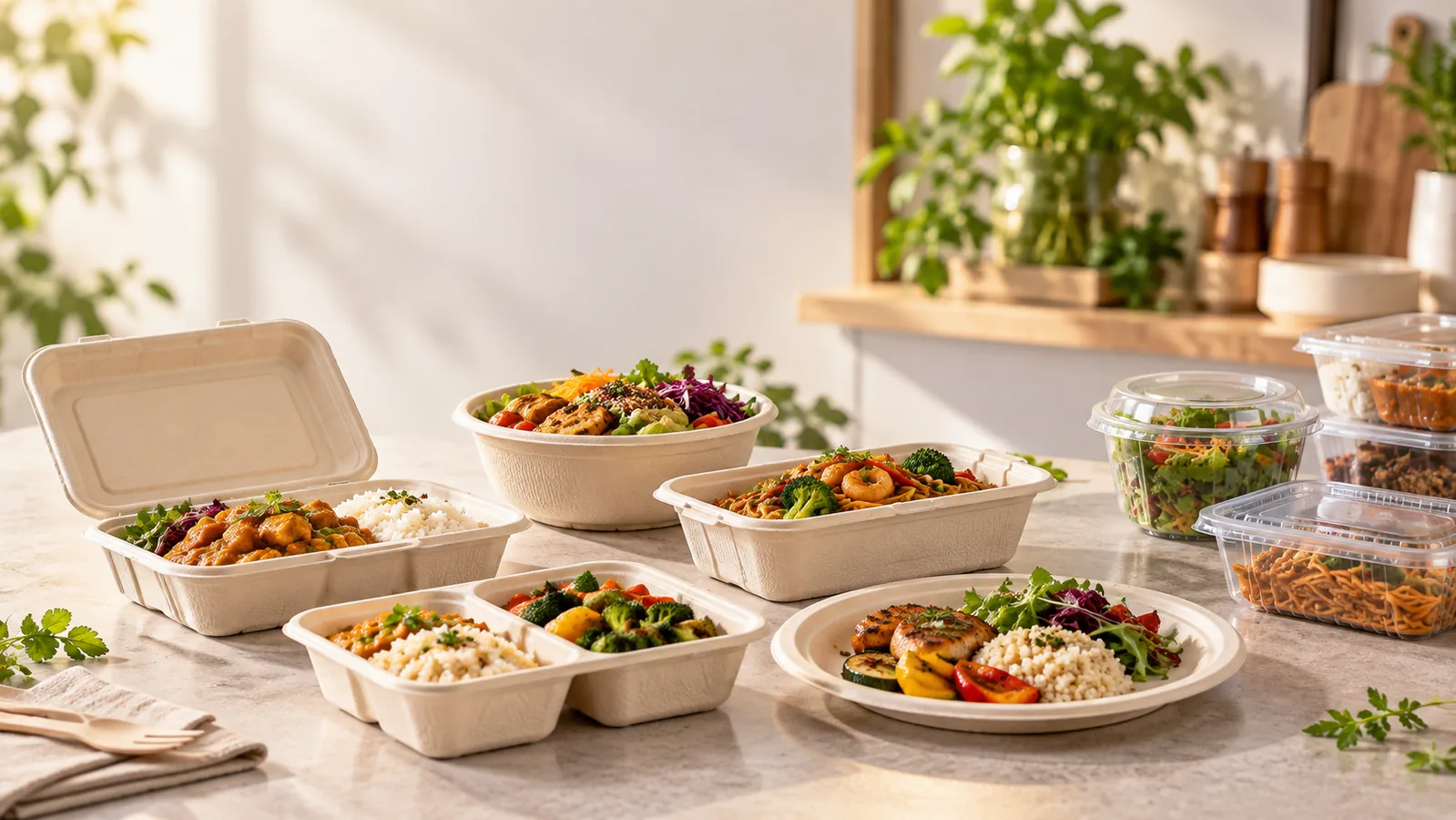
Compare fibre and plastic formats by food, handling, transport and local end-of-life conditions.
Compare the job, not only the material
Bagasse is moulded fibre commonly used for plates, bowls, trays and clamshells. Plastic containers are produced in many different polymers and structures. A useful comparison begins with the food: temperature, moisture, oil, portion shape and expected holding time.
Then consider the service model. Dine-in catering, counter takeaway and thirty-minute delivery create different demands. Closure security, stackability, visibility and resistance to softening may matter more than a single material label.
Test performance in context
Run a small service test with the actual recipe. Fill the container as staff normally would, close it, stack it, carry it and open it after the expected journey. Check the base, lid or hinge, edges and customer handling. Record where condensation or movement occurs.
Ask for the material and product specification rather than relying on appearance. Details for Arrowpack bagasse and container formats: [Add Arrowpack spec]. Any suitability statement should be tied to the exact product tested.
Use careful end-of-life language
End-of-life depends on material composition, food contamination and the collection and processing facilities available where the package is discarded. Bagasse does not create the same outcome in every location, and plastic categories also differ significantly.
Choose wording that matches documented specifications and local guidance. Clear disposal instructions are more useful than an absolute environmental claim that may not apply to the product or market.