
What GSM Paper Cup Do You Need for Hot and Cold Drinks?
· 5 min read · Arrowpack Guides
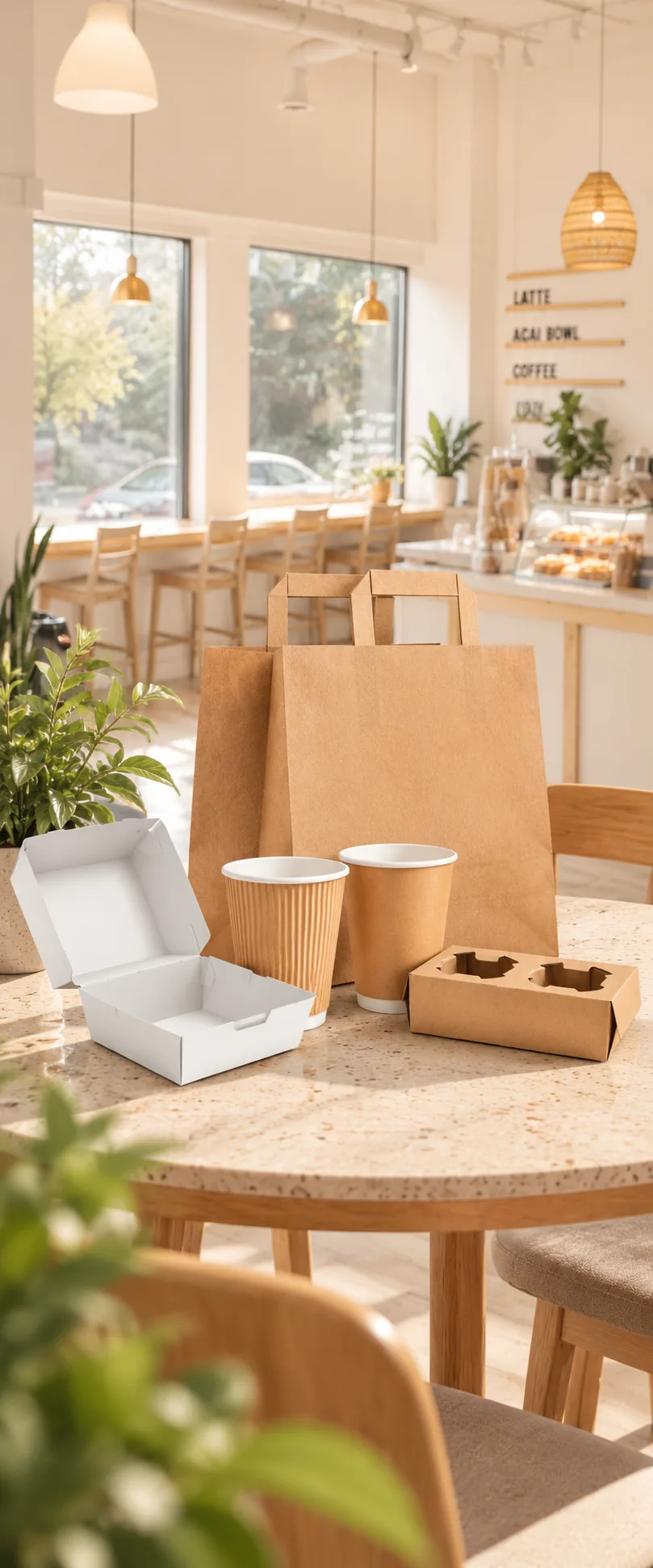
Pick paper cup GSM by cup size and drink temperature. Small tea and espresso cups (up to about 150 ml) usually run around 170–210 GSM, standard 240–360 ml hot cups around 210–230 GSM, and 450 ml and larger around 230–280 GSM. Cold drinks need board coated on both sides more than extra weight.
Paper cup GSM explained for cafés and caterers: typical board weights by cup size, hot vs cold drinks, coating sides and how to test before you order in bulk.
- GSM is the weight of the paperboard in grams per square metre, not the cup's capacity.
- Bigger cups need heavier board so the wall stays rigid when full and held.
- Hot cups are usually coated inside only; cold cups need coating on both sides.
- Double and ripple wall cups add an outer layer, so wall type matters as much as GSM.
- Always fill-test a sample with your real drink, lid and service time.
What does GSM mean on a paper cup?
GSM stands for grams per square metre. It is the weight of the paperboard used to form the cup wall and base. A 210 GSM board weighs 210 grams for every square metre of sheet. Higher GSM generally means thicker, stiffer board, though the exact feel also depends on the pulp and how the board is made.
GSM is not the size of the cup. A 150 ml cup and a 360 ml cup can both be quoted at the same GSM, but the larger one will feel softer because the same board has to hold up a taller wall and more liquid. That is why cup makers move to heavier board as capacity goes up.
The figure you see on a quote usually refers to the base paperboard. The plastic or water-based coating that makes the cup leakproof is applied on top. Ask whether the GSM quoted includes the coating or not, so you are comparing like with like across suppliers.
Which GSM suits each cup size?
Published industry guides give broadly similar ranges. For small cups of roughly 120–180 ml (4–6 oz), used for espresso, cutting chai or sampling, board of about 170–190 GSM is common. For 210–240 ml (7–8 oz) tea and coffee cups, around 190–210 GSM is typical. Standard 270–360 ml (9–12 oz) hot cups usually sit around 210–230 GSM.
Larger takeaway cups need more. For 400–480 ml (14–16 oz), guides suggest about 230–250 GSM, and for 540 ml and above roughly 250–280 GSM. These are starting points, not rules. Coating, wall construction and the base design all change how a cup performs at a given board weight.
For a café in Bengaluru serving filter coffee in 90–150 ml cups, the lighter end of the range is usually enough because the drink is finished quickly. A takeaway counter selling 360 ml lattes that travel in a car or on a scooter will want the stiffer end, so the cup does not flex when the customer grips it or the lid is pressed on.
Hot drinks vs cold drinks: what changes?
For hot drinks, the board has to stay stiff while it is warm and being held. Hot cups are commonly coated on the inside only, which seals the liquid in while leaving the outside printable. One guide places most hot cups between about 210 and 260 GSM, depending on size.
Cold drinks bring a different problem: condensation. Iced coffee, cold coffee, lassi and soft drinks make the outside of the cup wet, and uncoated outer board can soften over a long sitting. That is why cold cups are usually coated on both sides. Here, two-side coating matters more than simply buying a heavier board.
Guides do not agree on whether cold cups need more or less GSM than hot ones, which tells you the answer depends on the cup. A 360 ml cold coffee with ice that sits on a table for 30 minutes needs a different specification from a 200 ml juice drunk at the counter. Test with your real drink and serving time.
How do single, double and ripple walls change the picture?
A single-wall cup is one layer of board, so GSM carries most of the load. Single-wall cups suit tea, coffee and cold drinks served in smaller sizes, and they can be paired with a sleeve or cup holder when a hot drink gets too warm to hold comfortably.
A double-wall cup adds a second outer layer, and a ripple-wall cup adds a fluted outer layer with small air pockets. Both are built for hot drinks and are designed to be held without a sleeve. Because the outer wall adds stiffness, the inner cup does not have to do all the work alone.
Arrowpack supplies single-wall paper cups from 65 to 360 ml, double-wall cups from 240 to 540 ml and ripple-wall cups from 180 to 480 ml, along with matching lids and cup holders. If you are unsure which wall type fits your menu, our single vs double wall guide covers that choice in more detail.
Is a higher GSM cup always better?
Not always. Heavier board uses more material per cup, adds weight to every carton and takes more storage space. For a small cutting-chai cup that is emptied in two minutes, extra GSM adds little that the customer will notice. Choose the lowest board weight that passes your own handling test.
Where higher GSM does pay off is in large takeaway cups, branded cups that customers carry around, and drinks with long hold times. A cup that buckles when someone grips it, or a lid that will not seal because the rim has flexed, costs more in spills and complaints than the extra board would have.
Also think about where the cup ends up. Since 1 July 2022, plastic cups and glasses have been among the single-use plastic items prohibited in India, which pushed many businesses to paper. Paper cups still carry a coating, and what happens to a used cup depends on the waste and recycling facilities in your city.
How should you test cups before a bulk order?
Ask for samples in the exact size, wall type and coating you plan to order. Fill each one with your real drink at service temperature, fit the lid you will use, and hold it the way a customer would for the length of a normal visit or delivery. Note any softening, leaks at the seam or base, or flexing at the rim.
For cold drinks, leave a filled cup with ice on a counter for at least as long as a customer would, and check the outside and the base. For takeaway, put a filled, lidded cup in a carry bag or cup holder and walk or ride a short route. These simple checks tell you more than a number on a spec sheet.
Once a cup passes, note the board GSM, coating sides, wall type and lid size so repeat orders stay the same. Arrowpack can share samples and quote plain or custom printed cups in bulk, so you can test with real service before committing to a full order.
Frequently asked questions
What is the best GSM for a 250 ml tea or coffee cup?
For a single-wall hot cup of around 240–250 ml, many industry guides suggest roughly 190–220 GSM board. If customers carry the drink away or hold it for a long time, the stiffer end of that range, a double-wall cup, or a cup holder will make it more comfortable.
Do cold drink paper cups need a higher GSM?
Not necessarily. Cold cups mainly need coating on both the inside and outside so condensation does not soften the board. GSM still has to suit the cup size. Test a filled cup with ice for your normal serving time before choosing.
Does GSM affect how hot the cup feels in the hand?
Somewhat, because thicker board passes heat a little more slowly. Wall construction makes a bigger difference. Double-wall and ripple-wall cups add an outer layer that keeps the hand away from the hot inner wall, which is why they are usually held without a sleeve.
Is GSM the same as PE coating?
No. GSM describes the weight of the paperboard. PE (polyethylene) or water-based coating is a separate thin layer that makes the cup leakproof. A quote should state both the board GSM and the coating type, and whether one or both sides are coated.